
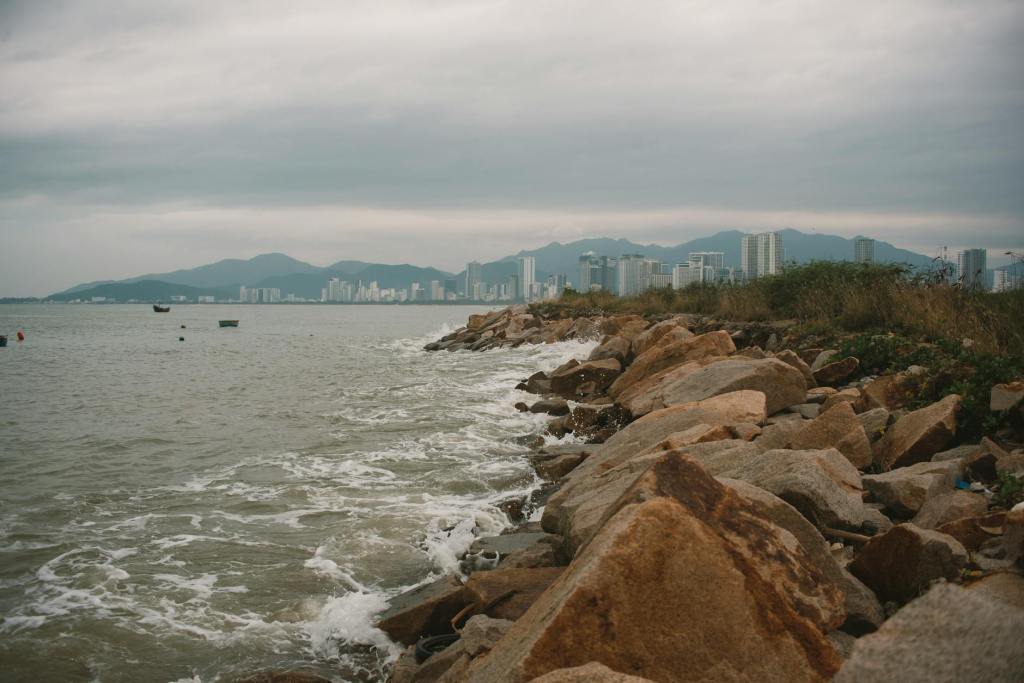
Source: Yale Environment 360 | Author: Fred Pearce
Link to article: https://e360.yale.edu/features/sea-level-rise-land-subsidence
- Underestimated Risk: Current research suggests that tens of millions of people previously thought safe from coastal flooding are actually at imminent risk.
- Higher Baselines: Real-world sea levels are currently 9.4 to 10.6 inches higher than global models predicted, meaning the “starting point” for future rise is much higher than previously assumed.
- Sinking Land (Subsidence): In many of the world’s most populous coastal areas, the land is sinking (subsiding) significantly faster than the ocean is rising.
The Role of Land Subsidence
- Dominant Driver: On 18 of the world’s 40 largest river deltas, the rate of land sinking exceeds the rate of sea level rise, sometimes multiplying the effective flood risk by tenfold.
- Anthropogenic Causes: While some subsidence is natural, most modern sinking is caused by human activity, including:
- Groundwater Extraction: Pumping water for agriculture and cities causes soil to compress.
- Infrastructure Weight: The massive weight of urban megacities pushes the land down.
- Sediment Loss: Dams and levees upstream prevent natural silt from reaching deltas to replenish them.
Global Impact
- Vulnerable Populations: Approximately 80 million people currently live on coastal land that is technically below sea level, nearly double previous estimates.
- Geographic Disparity: The Global South is particularly vulnerable, as many major megacities are built on rapidly subsiding river deltas.
- Corrected Projections: Updated calculations suggest that a sea level rise of just 3.3 feet (1 meter) will submerge 37% more area and affect 68% more people than earlier models suggested.
Strategic Takeaways
- Beyond Carbon: While reducing greenhouse gas emissions is vital for long-term sea levels, coastal policy must also address local subsidence through better water management and sediment restoration.
- The “Blind Spot”: Past research focused heavily on melting ice and thermal expansion but overlooked the “geological reality” of the ground sinking beneath coastal communities.
 Climate News Now
Leave a comment